Ventura TV OS’s Rob Caruso On Reimagining the Connected TV OS For A Better Viewer Experience

In this latest Innovator Spotlight from our new report The TV OS Wars: The Battle For The Living Room, Ventura TV OS’s Rob Caruso explains how a better ad experience translates into a better viewing expreience. You can download the report for free thanks to Ventura TV OS and our other sponsors, WunderKIND Ads and V.
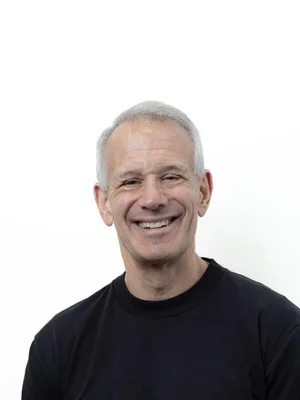
“We want people engaging with and enjoying what’s on their television sets” notes Rob Caruso, Senior Vice President, Consumer Products, Ventura TV OS at The Trade Desk. “The goal is to get viewers into content quickly and create more serendipitous moments of discovery so that the TV OS becomes more of a background layer.”
ALAN WOLK (AW): When you’re talking to an OEM that is already looking at Android TV, Fire TV or another established operating system, what is the pitch for Ventura?
ROB CARUSO (RC): What we are aiming to do is balance the value exchange in a way that brings the OEMs into the fold, rather than having them just become a distribution vehicle for someone else’s goals.
What we’ve seen over the past few years is that this has not always created symmetrical value for OEMs. The platform value grows as the user becomes more valuable to the platform. But the OEM’s value as a distributor often remains relatively static.
Ventura is trying to create a model where, as the value grows, the value is shared.
AW: So the issue is not just that another company controls the interface. It is that the TV manufacturer can get locked out of the economics created by its own device?
RC: Exactly. Amazon wants you to consume more Amazon content, buy more things on Amazon and become more valuable as an Amazon user. Google wants you to become more of a Google user, more of a YouTube user and more entrenched in Google services.
That is the concern for OEMs. The platform value grows and grows, but the OEM’s value as a distributor does not necessarily grow with it. Ventura is trying to create a model where everybody participates in that growth.
AW: One of the big issues with TV operating systems is neutrality. If the OS also owns content, there is always going to be pressure to push that content. How does Ventura think about that?
RC: For the past five or six years, the idea has been that the TV manufacturer or the OS is going to bring all of your content into one space and become a discovery hub. There is nothing fundamentally wrong with that. But it is challenging because you need all the content partners to participate in order to truly give the user all their content in one place.
That promise also becomes complicated when the OS has to optimize its own content service. If I’m saying, “Alan, I’m going to give you everything you might want to watch,” but I’m also putting things in front of you that I need you to watch because it is good for my bottom line, that is not fully objective.
That is one of the fundamental differences with Ventura. We do not have a TV service we need to optimize viewing for. We don’t have a Roku Channel, Amazon Prime Video, Samsung TV Plus or Google Freeplay equivalent that drives monetization for the platform and needs to be promoted.
AW: How does that change the revenue model?
RC: It is not uncommon in the TV OS space to have some kind of revenue share for revenue generated on the platform by a third-party publisher. It is also not uncommon for publishers to share ad supply with the OS provider, which the OS provider can then aggregate, apply signal to, and monetize.
The key difference for Ventura is that we are looking to pass the bulk of that revenue sharing on to the OEM partners. As engagement grows on these platforms, and as the platform receives revenue, that value gets shared with the partners who are distributing the Ventura OS.
Because we are not building out a first-party service and because we are not an inventory source, we are also not trying to package ad inventory and resell it in competition with our partners.
AW: Discovery is one of the places where the TV OS has become most important. What is Ventura trying to do differently there?
RC: We are still in a back-to-the-future moment where always-on, browsable TV is becoming more important again. It is less about asking the user to make explicit decisions and more about using algorithms and personalization to bring content forward.
That is where FAST and playlists become important. They can create more lean-back moments rather than forcing the user into a choice. Pulling someone forward and making them choose something creates friction. Sometimes it does not lead to engagement at all.
With Ventura, we are leaning away from those VOD-style choice moments and more into the idea that when you turn your TV on, you probably want to be entertained. We are going to take a pretty good guess, with the help of data, at what might entertain you and make it easy to move into that content.
AW: So the goal is not necessarily to give people more choices. It is to reduce the amount of work they have to do before they start watching.
RC: Exactly. Everyone has had the experience where a movie has been surfaced to them multiple times as a VOD title and they skipped over it. But then they are flipping channels, see that same movie already in progress and get sucked in.
Starting it from the beginning and committing to the whole thing creates a cognitive load. But if it is already on, it becomes easy to pick up where it is.
Those are the moments we think can lead to more serendipitous engagement. It also creates better outcomes for advertisers because users are in front of content that fits their needs.
AW: I hear a lot of complaints around how TV OS home screens are starting to feel like digital billboards. Is there a risk that viewers start pushing back?
RC: I think we may start to see a revolt against platforms that are doing this for short-term gain around CPMs and fill rates.
You can see it in Reddit threads and reviews when UI refreshes happen. People notice when these things become overloaded with advertising, especially when the ads are not relevant, personalized or targeted so there is no obvious reason why I am seeing this.